
-
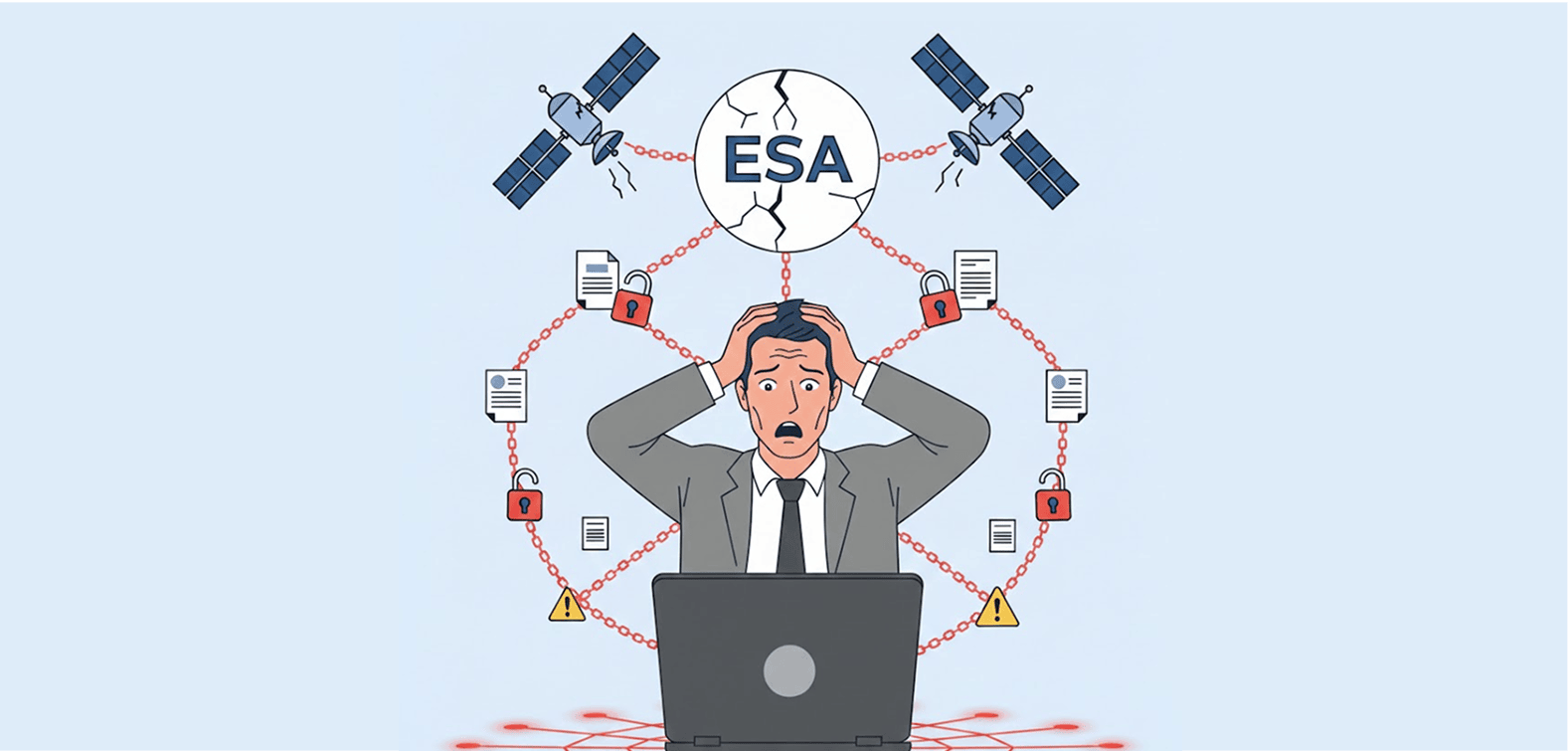
The European Space Agency just suffered a major cyberattack, bad actors infiltrated their external servers.
-
This incident had shown multiple signs in December and the final hit hijacked around 200 gigabytes of sensitive data.
-
Employees and the agency are perturbed as the data could get monetized on the dark web for huge deals.
The hack news has sent shivers across the European Space Agency (ESA). Email credentials of employees and system configurations of the agency are already flying around underground forums.
Mid-December saw the penetration of ESA’s servers by malicious actors, utilizing the servers for collaborative engineering purposes. They accessed the servers undetected for about a week, harvesting as much intelligence as possible before ESA discovered the breach. By the time ESA identified the intrusion, the perpetrator had already extracted all the data from the servers.
The servers that were affected had no direct link to the agency’s core internal system. Yet it carried sensitive data. According to the bad actors, they have access to source code, tokens that grant users access to certain platforms, detailed Continuous Integration/Continuous Deployment (CI/CD) pipeline information, and even hard-coded tokens.
Bad actors to monetize stolen credentials
A user named “888” took responsibility for the attack on BreachForums, boasting about extracting 200 gigabytes of data from the agency’s systems. They’re currently selling portions of it and demanding payment in Monero, the preferred cryptocurrency for those seeking anonymity.
This pattern of stealing and listing sensitive organizational data on dark web markets is rampant, mirroring recent incidents such as the sale of a major telecom provider’s internal network plans.
The space agency has yet to verify the full extent of the breach, but confirmed that the affected servers supported open scientific collaborations. Although the agency labeled the data “unclassified,” security experts continue to express skepticism.
Clémence Poirier, a cybersecurity researcher at ETH Zurich, told Space.com that ESA staff email credentials are already circulating on the dark web, which has raised significant concerns among experts.
This follows a concerning trend of European organizations, including major industrial firms, finding their proprietary data published on similar forums following cyberattacks.
Those leaked credentials are serious. If the people working with the agency reused their passwords on a different platform, hackers might infiltrate other systems and launch further attacks.
ESA executes safety practices
ESA has disclosed the incident, begun a forensic investigation, and shared updates on X, saying that they started a complete security assessment immediately after they noticed unusual activity.
The agency secured the compromised systems and quarantined the affected sections of its network. It also confirmed that core mission systems remain safe and that no classified data was exposed.
Still, the release of internal credentials and software configs has sparked a difficult debate. Security professionals are questioning whether “unclassified” really means harmless. Even data not officially deemed sensitive can be dangerous in the wrong hands.
ESA says they’re cooperating with law enforcement and cybersecurity experts as they try to contain the damage. The situation is ongoing, but one thing is clear: Data from “peripheral” systems can cause major problems if it ends up on the dark web.
Staying safe amid cyber attack trends
As the space industry grows, threat actors will continue to attack it. So, cybersecurity professionals are calling for awareness. Unfortunately, there is malware that steals data, and they have to stop. So, organizations must remain on guard against such. This type of malware always hides in ads or hyperlinks.
The European Space Agency (ESA) has been plowing on web security improvement for years now. Sadly, the recent incident depicts the issues that arise when securing complex systems with more than one independent and interrelated component.
