
-
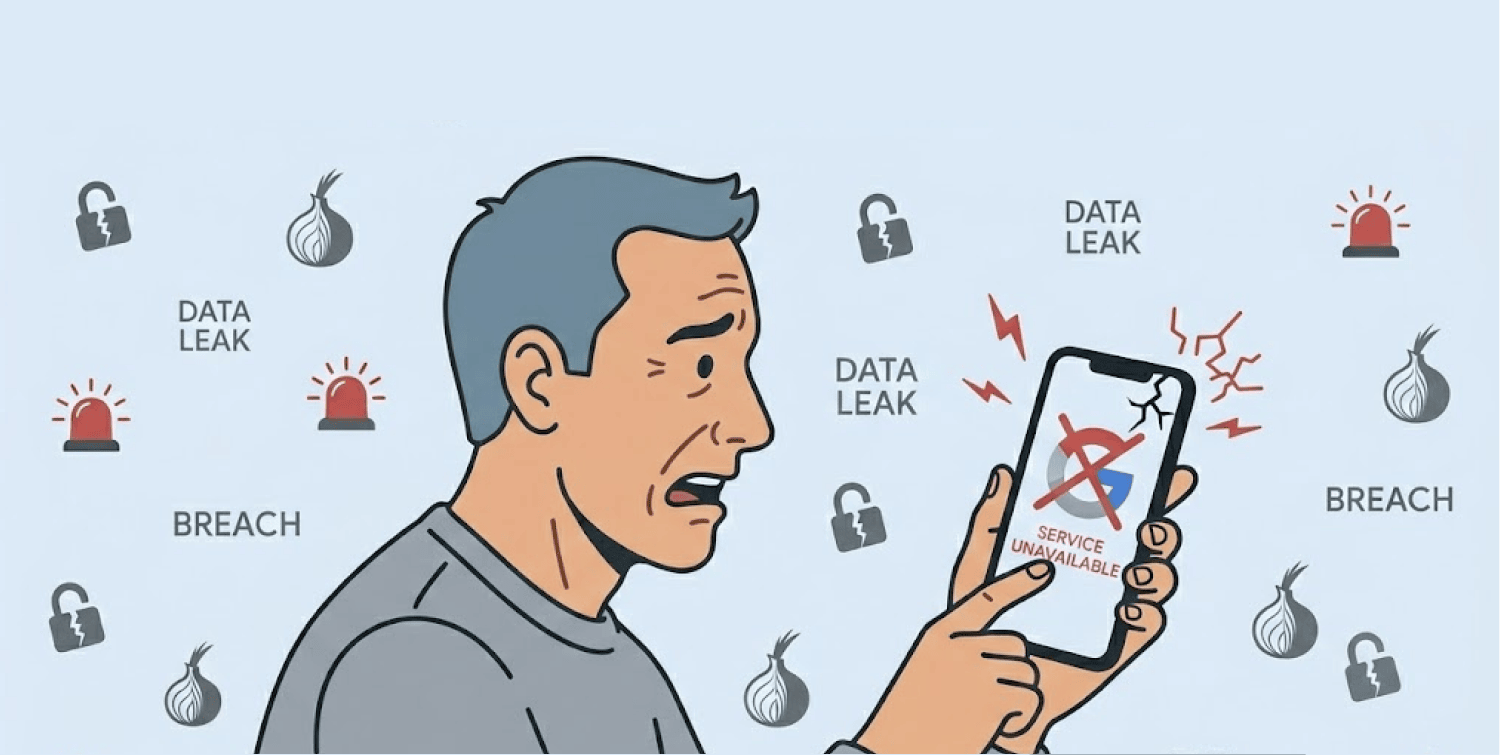
Google has terminated its free Dark Web Report, which had been sending automatic alerts of any of your private info found in a data breach on the dark web.
-
The company is now focusing on other security tools, such as Password Checkup, Security Checkup, and 2FA, rather than dark web checking.
-
Security experts recommend implementing other measures for users to look out for possible data breaches of their information.
Google has officially removed its Dark Web Report tool, a free feature on the platform that scans the dark web and reports breaches of users’ personal information. Before now, this service checks if a user’s email addresses and other details associated with their Google accounts appeared in exposed data that criminals collect.
On January 15, 2026, the feature stopped scanning for new breaches, and Google finally scrapped it on February 16, 2026. This means you can no longer rely on Google to automatically alert you to breaches found in databases of known dark web leaks.
The dark web is a part of the internet unindexed by traditional search engines, where criminals buy, sell, or trade stolen items such as passwords and email addresses. Some tools that monitor the dark web provide the ability to identify and report potential instances of theft or breaches and help users as early and quickly as possible.
Why Google removed the dark web report
Google’s own explanation for ending the tool was that it did not give users enough clear next steps after an alert. User reviews and security discussions indicate that the feature can reveal if someone’s personal information appears on exposed password lists, but it often fails to provide guidance on what to do or how serious the exposure is.
The service initially launched for a select group of customers, but Google later expanded it to more users, even though many felt it offered less practical guidance on managing exposure than the original version.
Going forward, Google said it will focus on additional security features that provide the user with more actionable protection.
Google still offers several account safety features that users can use:
- Security Checkup a tool that reviews account settings for weak spots.
- Password Manager with Password Checkup. This will scan saved passwords against known breach lists.
- Two-factor authentication (2FA) adds another layer of login protection.
- Passkeys are a password-free security method.
These tools help secure accounts, but none of them scan the dark web for you automatically as the old Dark Web Report did.
What users lose without the tool
Without Google’s Dark Web Monitor, users will no longer have a built-in way to monitor for leaks of their personal information related to their accounts. Prior to now, Google would notify users if their email address or other information came up in a known data breach, which helped them obtain early notice of possible identity theft or compromised accounts.
Users will now have to utilize methods other than Google’s Dark Web Monitor to check if their data has been compromised by breaches or dark web activity. One popular independent resource for verifying if your email address appeared on a breach is ‘Have I Been Pwned?’, where you can verify manually if your email address is part of a known breach. This site is widely used by security professionals, and there is no cost to access it.
Paid or free third-party identity monitoring resources provide the same service, in addition to more benefits – ongoing alerts to monitor for future breaches and credit monitoring. If hackers compromise personal identifiers such as SSNs, phone numbers, or financial information, these services help users determine the next steps.
Experts recommend that all users take advantage of installing Multi-Factor Authentication (MFA) for all online accounts as a preventive measure against attacks. Multifactor authentication can protect accounts from unauthorized access even if one’s password becomes compromised or leaked. Many major corporations, such as banks, email, or social network providers, will have the opportunity to provide consumers with this type of account protection.
What you can do now to stay safe
In addition to having access to the dark web for scanning purposes, there are things you can do now to maintain your online identity:
- Create Unique Strong Passwords and Change Them Frequently. Never recycle the same password across any of your accounts; always create a unique password for each account.
- Activate Two-Factor Authentication (2FA). You should enable 2FA whenever available on your accounts. This adds an extra layer of protection against attackers, even if they already know your current password
- Leverage Independent Breach Monitoring Services. One of the best practices is that you regularly check with independent breach monitoring services, such as Have I Been Pwned or other dark web monitoring tools that may exist and are offered by your security vendor. They assist in identifying data leaks and allow you to take immediate action.
- Conduct Regular Reviews of Your Accounts. Scan emails, banking apps, and other accounts for any unusual activity. Early identification of any attempted sign-ins will help prevent additional harm to you.
Although experts believe that leaks of an individual’s personal data on the dark web do not always cause harm immediately, they do increase the risk of identity theft or fraud over time. Individuals must take a proactive approach by regularly checking for breaches and responding immediately if their private information appears.
The European Space Agency breach serves as a sobering example; if an international space agency can have its staff data leaked on the dark web, the threat to individuals is real and requires constant vigilance.
