
-
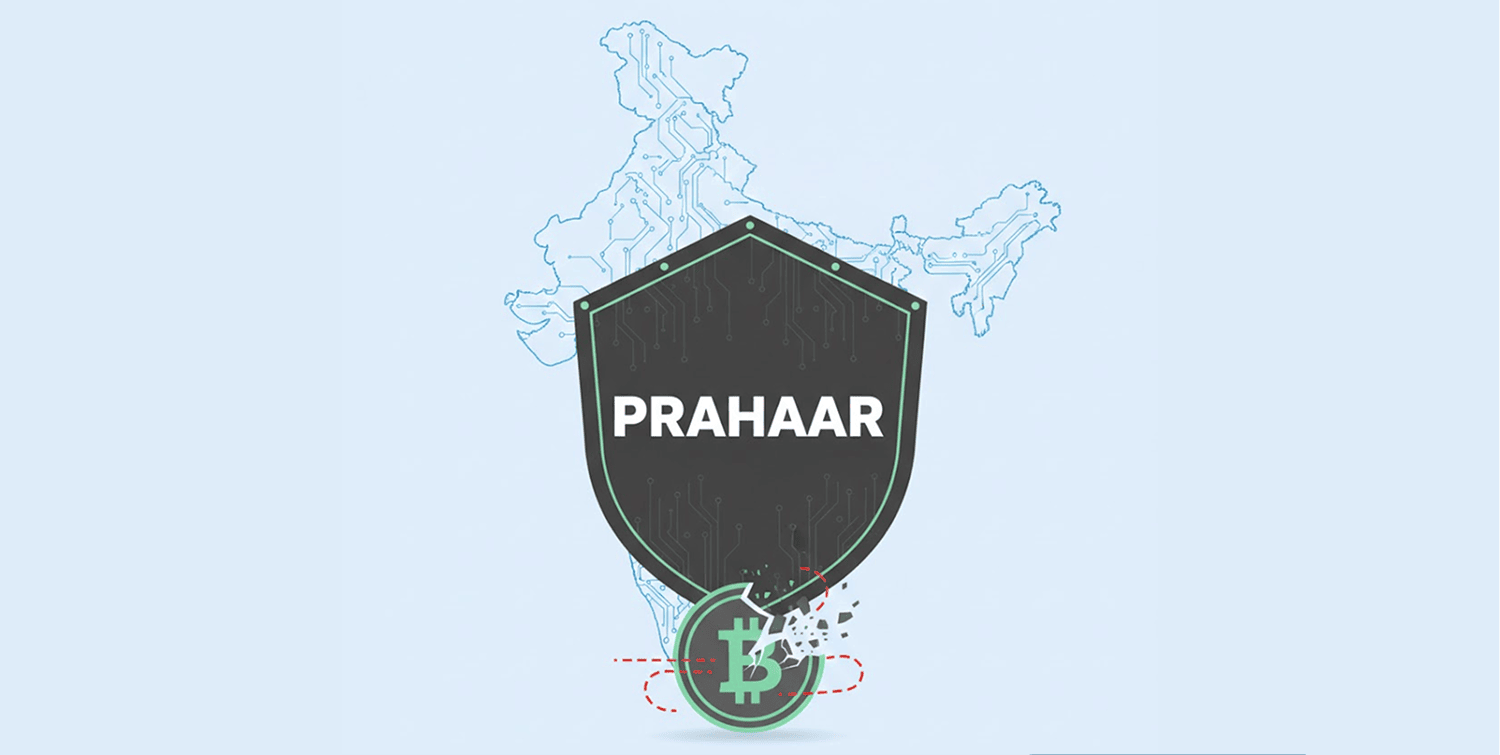
India’s Ministry of Home Affairs has introduced “PRAHAAR” as a counter-terrorism strategy aimed directly at crypto wallets and blockchain networks funding terrorism anonymously.
-
A number of past enforcement actions and investigations, as far back as 2018 have been related to WazirX, indicating how terrorist organizations can transfer money across borders using digital assets, an action authorities refer to as “crypto hawala.”
-
Experts from around the world are suggesting that India should create a more sensible regulatory framework that will prevent illegal cryptocurrency flows into the country.
On February 23rd, 2026, the Indian Ministry of Home Affairs (MHA) released a new blueprint for combating terrorism known as “PRAHAAR,” also identifying areas where cryptocurrencies and blockchain technology help terrorists to fund their operations.
In its findings, the MHA cites the increasing reliance by terrorist organizations on crypto wallets for making anonymous financial transactions as raising red flags regarding the ways that digital finance is utilized to facilitate criminal activity.
Crypto wallets open a door for anonymous transfers
The main point of PRAHAAR is that the use of digital currencies enables criminals to transfer funds globally and anonymously. Because extremists can use cryptocurrencies instead of traditional banks, digital currencies bypass the KYC and AML checks that banks enforce, creating a significant loophole.
The main premise of this strategy is that blockchain is inherently transparent (one can theoretically see all transactions on the blockchain); however, determining the identity of the real-world individual behind a virtual wallet is very challenging and requires specialized investigative tools and rigorous forensics, thus giving people who finance terrorism a significant advantage in accessing their funds.
This very challenge is at the heart of a high-profile case in the United States, where prosecutors sought a 5-year sentence for Samourai Wallet’s dark web ties, arguing that the wallet’s privacy features, while appealing to legitimate users, made it a preferred tool for criminals laundering money through the dark web and evading the very financial oversight India is now struggling to enforce.
Past cases expose the “Crypto Hawala” playbook
When forming PRAHAAR, investigators greatly relied on previous cases. The National Investigation Agency’s (NIA) probe into 2023 regarding an ISIS-driven module headed by Mohammad Mohsin Ahmad, who was detained at Batla House, New Delhi, helped agencies have a concise understanding of how they operate.
The NIA alleged that this group collected funds from approximately twenty different sources; directly depositing these into a Canara Bank account, and then transferring those funds to a WazirX trading account; and converting the deposited funds into Tron (TRX) tokens; and then transferring those tokens to an entity in Syria called “Ummimmarah.”
The NIA called this approach ambiguous but referred to it as ‘cryptocurrency hawala,’ an informal trade-based value-transfer system that uses cryptocurrencies to bypass traditional financial institutions. This occurred in less than two years, demonstrating how quickly cryptocurrencies can facilitate international transfers of funds.
The Enforcement Directorate (ED) also previously issued a show-cause notice to WazirX (in June 2021) regarding ₹2,790 crores (more than 305,000 USD) associated with money laundering to a Chinese gambling application. The same pattern keeps reappearing: cryptocurrency losses happen rapidly, they leave little visible evidential traces/footprints, and they exceed the pace of conventional law enforcement efforts.
Enforcement is ramping up, but gaps remain
Due to the July 2025 Pahalgam Terror Attack, the Indian Government responded very aggressively afterwards. The Financial Intelligence Unit (FIU) immediately opened investigations on numerous major exchanges, such as Binance and WazirX, and initiated efforts towards identifying and determining the source of abnormal TRX transaction activity associated with WazirX wallets in Pakistan, Jammu and Kashmir, and Syria.
Following this, the Enforcement Directorate (ED) froze certain WazirX accounts, where they felt users were transacting to violate the Foreign Exchange Management Act (FEMA) laws. The State Investigation Agency (SIA) executed UAPA investigations and raids on WazirX wallets that were related to terrorist funding.
Although these actions indicate the seriousness of their intent to do something about it, enforcement alone will not close the void in the regulatory environment. As Romy Johnson from Toofaan Army expressed it,
“The truth is that there are millions of Indians using digital assets in our country today; however, the market continues to have a disjointed and reactive approach to its regulations.” Leaning on legacy laws such as UAPA and FEMA erects uncertainty, pushes activity in the direction of unregulated or foreign platforms, and optimally reduces transparency.”
PRAHAAR calls for tighter oversight of Virtual Asset Service Providers (VASPs), real-time on-chain monitoring, and deeper international cooperation. Terror financing rarely stays within one country’s borders, and neither can the response.
The central tension is hard to escape. Cryptocurrencies operate quickly and without a central authority; these same qualities that give them power also make them difficult to regulate. India now has to answer a difficult question: can regulators shut down illegal crypto flows without cutting off the legitimate digital economy that millions of citizens already depend on? PRAHAAR sets the intention. Execution will determine everything.
