
-
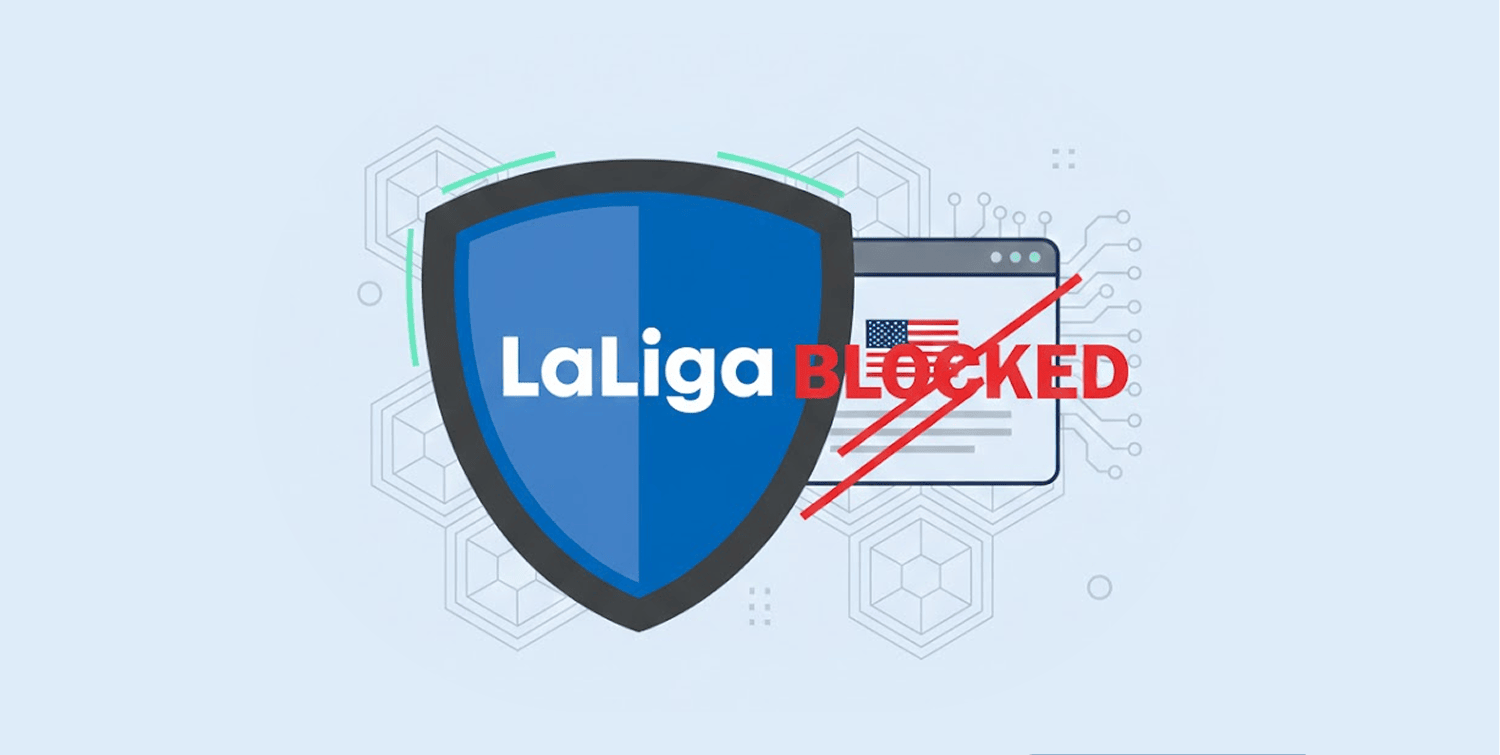
LaLiga’s court-authorized IP blocking campaign swept up freedom.gov, an official U.S. federal government website, cutting Spanish users off from it entirely.
-
Spanish courts have handed LaLiga one of Europe’s most aggressive anti-piracy frameworks, but the same speed that makes it effective also makes it dangerously imprecise.
-
VPN providers like ProtonVPN and NordVPN now face legal obligations to enforce these blocks, putting their core privacy promises under serious strain.
Spain’s most powerful football league just blocked a U.S. government website, not through hacking, not through diplomacy, but through an anti-piracy campaign that keeps growing faster than it can aim.
Spanish internet users who recently tried visiting freedom.gov, an official website run by the U.S. federal government, hit a wall. LaLiga, Spain’s top professional football league, triggered the block through its sweeping court-authorized campaign against illegal football streaming. No cyberattack. No diplomatic fallout. Just a blunt blocking system catching the wrong target.
Digital rights advocates and internet freedom observers quickly took notice, and the incident reignited uncomfortable questions about what happens when broad IP-based blocking orders collide with the messy, shared reality of how the internet actually works.
LaLiga’s legal machine misfires
LaLiga has spent years building one of Europe’s most legally robust anti-piracy operations. Working through Spanish courts, the league secures injunctions that force domestic internet service providers to cut off IP addresses linked to unauthorized streams, often in near real-time during live match days. Spanish courts have consistently backed the league, granting orders that move fast and hit hard.
But speed has a price. IP addresses are not exclusive. A single address can simultaneously host thousands of completely unrelated websites and services through a common practice called shared hosting.
When LaLiga’s system flags an IP address for carrying pirated content, every other legitimate service sharing that address disappears for Spanish users, instantly, without review, and with no clear fast-track for correction.
That is exactly what hit freedom.gov. The U.S. government website, which promotes democracy and freedom of expression internationally, happened to share an IP address with content that LaLiga’s systems flagged as piracy-related.
The league’s blocking infrastructure made no distinction. It treated an official arm of the U.S. federal government the same way it treats underground streaming operations.
VPN providers get dragged in
Spanish courts have recently pushed the blocking obligations even further. Newer rulings now classify virtual private network providers as legal intermediaries, placing companies like ProtonVPN and NordVPN under the same blocking requirements that apply to traditional ISPs.
That expansion carries serious implications. Journalists, activists, businesses, and everyday users rely on VPNs precisely because they promise not to monitor or interfere with traffic. Content-blocking mandates put VPN providers at odds with their core privacy commitments and undermine the foundation of their business model.
David Peterson, general manager of Proton VPN, publicly flagged the freedom.gov block, calling out the obvious irony: a website dedicated to promoting freedom was now sitting on Spain’s anti-piracy blocklist alongside illegal streaming services.
“A site literally called freedom.gov is being blocked,” Peterson noted, and his remarks spread quickly online, handing fresh ammunition to critics who have long questioned whether these blocking systems carry sufficient safeguards.
Collateral damage is the system working as designed
The freedom.gov incident is not a glitch. It is what IP-based blocking looks like when it scales. Shared digital infrastructure ensures that innocent websites are routinely caught in these nets. According to critics, courts rush the framework, neglect collateral victims, and leave unaffected parties without a quick path to unblock content.
While LaLiga’s overbroad blocks sweep up legitimate sites, a different kind of threat lurks in users’ browsers, where fake Chrome extensions have stolen data from over 300,000 users by impersonating legitimate tools, proving that sometimes the danger isn’t blocked content, but the seemingly helpful software users willingly install.
LaLiga’s system may be legally sound and technically effective at disrupting piracy. But effectiveness and precision are different things entirely. Blocking a U.S. government website promoting freedom of expression while trying to stop illegal football streams illustrates exactly how wide that gap can get. LaLiga has not issued any public statement addressing the matter.
