
-
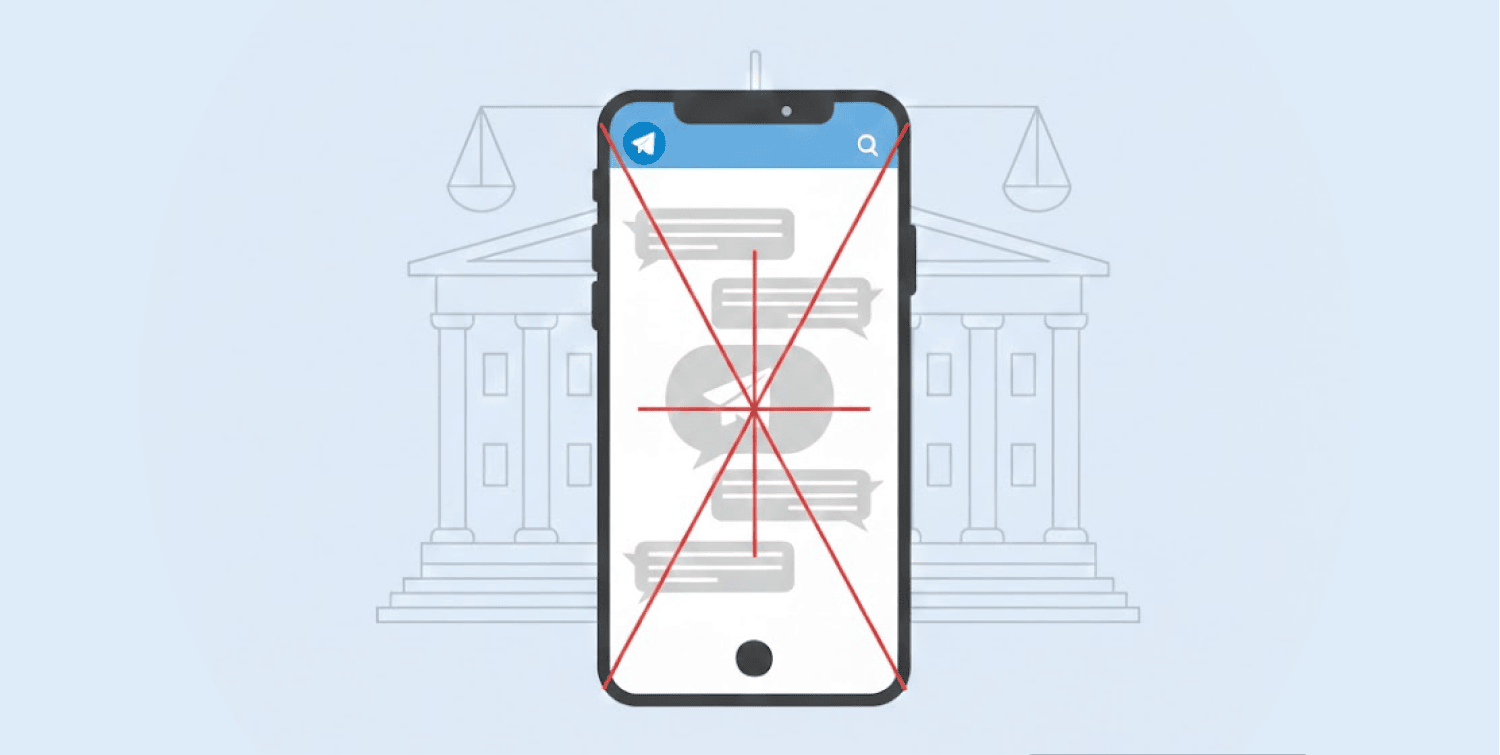
Telegram has cautioned its Spanish consumers that new restrictions from the government may result in what Telegram fears will be a “surveillance state”.
-
The newly introduced rules say everyone on social media has to verify their identity, and if the companies running these platforms don’t censor content the way the government wants, their top executives could actually end up in jail.
-
Pavel Durov, the CEO of Telegram, isn’t happy about any of this —he’s made it clear he plans to fight for users’ privacy and their right to speak freely.
There’s a digital firestorm brewing in Spain. The Spanish government recently proposed some new rules to regulate the use of the internet in the country.
Telegram Founder thinks the rules are a direct attack on freedom of speech, warning millions of users that Spain could become a surveillance state.
Spain’s New Digital Regulations Stir Controversy
The Spanish government, with its Prime Minister Pedro Sánchez’s backing, instituted new electronic laws. Following the announcement of these new laws, the CEO of Telegram (Pavel Durov) sent out a message to each of his users in Spain expressing that he views the new laws as a ‘danger to freedom of expression and privacy’ and as a ‘red flag’.
So, what are these new electronic laws? There are four main components to the plan, and privacy advocates fear all four. One is a prohibition on children under 16 from using social media, which would require strict age verification, including ID scanning or facial recognition. In his posts, Mr. Durov claims this goes beyond just the impact on children. It forces everyone to prove who they are just to speak online. This kills anonymity.
Second, these rules put platform bosses on the hook—personally. If their company doesn’t take down “illegal, hateful, or harmful” content quickly enough, the top execs could end up in jail. The fear is that platforms will panic. They will censor anything even slightly controversial to avoid prison. This could silence political dissent and journalism.
Then there’s the third rule, which goes after a platform’s algorithm. If it amplifies “harmful” content, that’s now a crime. Critics warn that this basically gives the government control over what you see online. It could bury opposing views in state-approved echo chambers.
Finally, platforms must track and report their “hate and polarization footprint.” Here’s the real issue: no one really knows what counts as “hate” or “polarization.” Everything’s fuzzy. Durov worries that criticizing the government could be labeled as divisive. This could be used to suppress opposition voices.
Telegram’s Stance and User Reactions
Durov is not staying quiet. He stated, “We shouldn’t let freedom of speech die in silence.” He didn’t dance around it—he said once you lose free speech, it’s game over. Also, he promised he won’t let Spain strip people of that right.
He reiterated Telegram’s position on strong encryption with no access points for the government and made clear that he is against government excess. This clash between privacy tools and state oversight extends beyond messaging to the realm of financial anonymity, where prosecutors recently sought a 5-year prison sentence for the creators of the Samourai Wallet over its alleged dark web connections. Furthermore, he spoke with those who were concerned about the policies that Telegram had regarding user privacy.
One user asked if the company’s famous “zero bytes” of shared user data claim was still true. Durov’s response was firm: “Telegram has disclosed ZERO bytes of messaging data to third parties throughout its history. And we’d rather shut down the entire project than ever start doing it.”
The reaction from users online has been intense and mixed. One French user asked him to do the same for French users, to which he replied that he has in the past and will continue to do so. France is at the source of the problem, Durov added, suggesting he sees this as a broader European trend.
Other users supported Telegram’s technical argument. One noted that you can’t verify a minor’s age without first identifying every adult. Durov agreed, calling it “surveillance infrastructure.” He also argued that the rules will backfire. Kids will just move to fringe platforms or use VPNs, making them less safe.
For users concerned about privacy and considering this option, a critical first question is: Are VPNs legal? Our guide breaks down the complex global landscape of VPN legality.
The battle lines are drawn. On one side is a government pushing for what it calls “safety” and “protection.” On the other is a major tech platform and privacy advocates who see it as the first step toward a “digital prison.” The outcome will have big implications for how Europeans use the internet.
