
-
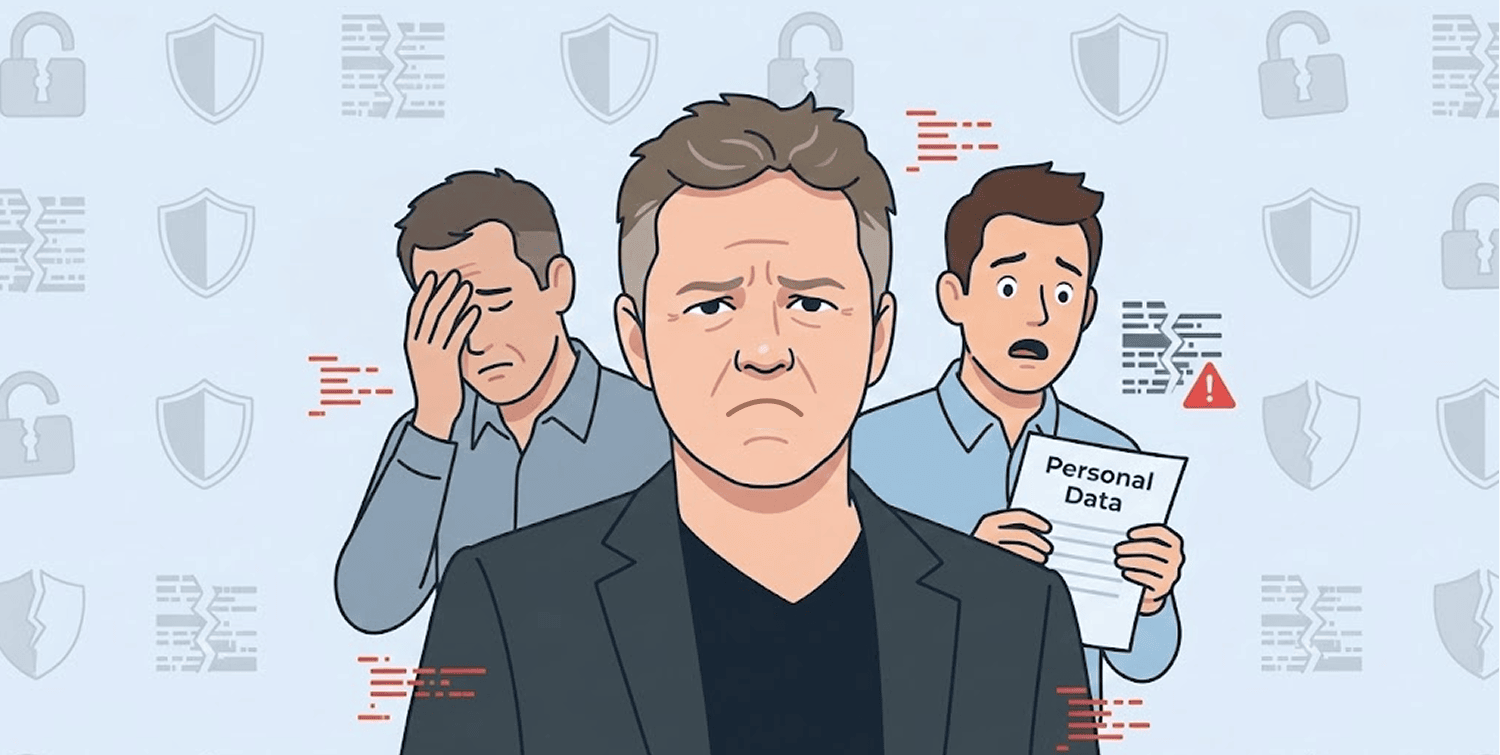
Despite more privacy tools than ever before, personal data breaches hit 1.35 billion people in 2024 alone.
-
According to security experts, governmental surveillance is causing individuals to engage in self-censorship which is detrimental to democratic freedoms.
-
Privacy has been commodified and restricted only to those who can afford access to it.
Revisiting a 2015 classroom scene reveals a troubling truth: A teacher asks students if online privacy matters enough to protect. Not a single hand goes up.
That moment still affects Thomas Bunting. Bunting, 25, is an analyst at Nesta, the UK-based innovation think tank. “I was taught to handle this very well,” he explains, referring to his generation’s view of data as a type of currency as well as its acceptance of surveillance as part of daily life.
When he speaks with those who have exited social media, they tell him they have left because of screen time or addictive behaviours; “privacy never comes into play,” he notes.
The potential risk to privacy has increased to levels not seen before. In a Statista report as of 2024, an estimated 1.35 billion individuals (approximately 12.5% of the world’s population) had their information stolen or otherwise divulged due to breaches, hacks, or exposure from another source.
Over the previous five years, more than 160 countries adopted various types of legislation related to protecting your privacy. Most browsers now include built-in tracking blockers.
Most devices today include a user-friendly permissions dashboard, letting you easily control what information you share and with whom. Many users now utilize end-to-end encrypted messaging applications. Many in the cybersecurity community agree that: “We have an unprecedented amount of privacy management tools, yet at the same time we have a greater amount taken from us than ever before.”
The curtains question
Professor Alan Woodward, an authority in cybersecurity from Surrey University, has become fed up with people claiming they lack information or activities to hide from view. His reply is similarly straightforward: “What are curtains for in your bedroom?”
Professor Woodward argues that viewing privacy merely as a way to protect criminals misses the point. Instead, privacy should protect freedom of thought, the freedom to experiment, the freedom to disagree, and—most importantly—the ability to develop personally without constant surveillance.
The consequences of losing that privacy have far-reaching effects that many people never even think about. When people believe others are constantly tracking them, they tend to censor their own behavior, and this self-censorship harms free speech, ultimately weakening the foundation of democracy.
You can see the chilling effect in everyday behavior today. A young woman told me that many people in her circles avoid dancing at clubs because they don’t want to be filmed and embarrassed later. A generation raised on camera phones has learned how to perform for an audience that is not there.
Cookie banners and consent theater
People’s actions often fail to match their stated desires, and this gap is widely recognized. A recent Cisco Report titled “2024 Consumer Privacy Survey” proves this point with compelling evidence.
The survey shows that 89% of people care about keeping their data private, but only 38% have taken meaningful steps to protect it. In addition to that statistic, 56% of all Americans admit that they don’t read the security policies before agreeing to them.
Even with the will to protect themselves, people now face fewer options. For example, Google’s closure of its Dark Web Report leaves millions without automatic alerts for data breaches, widening the gap between privacy concerns and protection.
The system technically obtains consent, but it becomes practically meaningless, as some websites share browsing data with hundreds or even thousands of third-party partners.
Even Elon Musk aired his frustration with the cookie consent regime, posting on X that “Yes, you can have my damn cookie!” should simply be a default browser setting. It is a sentiment many share, and it illustrates the gap between privacy regulation and privacy reality.
Dr. Carissa Veliz, author of Privacy is Power, is direct about where blame lies. “We need regulators to do a better job at both framing the right laws and also enforcing them,” she says.
Protection for sale
Thomas Bunting puts it plainly: “In 2026, online privacy is a luxury, not a right.” He paints a scenario where smart fridges relay dietary data to health insurers, not science fiction, but a logical extension of the data economy already in motion.
Meta charges a subscription fee to opt out of targeted advertising. Apple’s marketing strategy revolves around the idea of “privacy first” and therefore has a higher price tag when compared to other brands in the market. People who buy this protection will be protected, while others will miss out on this luxury.
But even paid protection can’t guard against every threat, as seen in the fake Chrome extensions that tricked 300,000 users into installing data-stealing malware, proving that privacy isn’t just about what you pay for, but about staying vigilant against deceptive software that looks legitimate.
Veliz uses Signal as her preferred method of communication for interviews instead of using anything else, and believes that people still value their right to privacy; people simply do not feel that they possess any sort of control over their personal information.
For Veliz, the ultimate goal is to encourage stronger regulations, more responsible companies, and allow users to make their own choices about which technology they want to use. She also emphasized the importance of both using the right technology and properly using it at the same time.
It was in 1999 when the co-founder of Sun Microsystems, Scott McNealy, said, “You have no privacy” to the entire world, and to get over it. Twenty-seven years later, the question is no longer whether he was right, but whether anyone still minds.
