
-
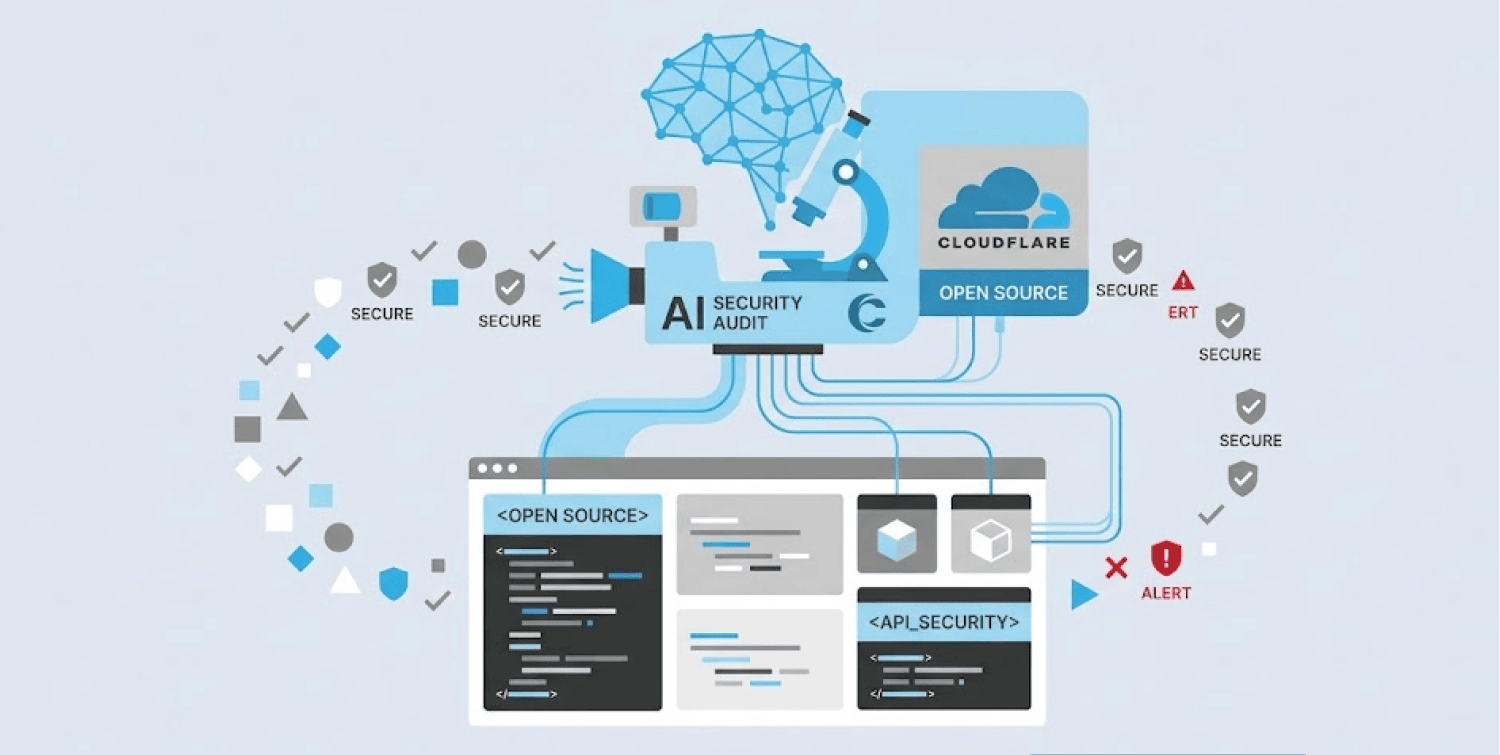
Cloudflare has released Security Audit Skill, an open-source tool that helps coding agents check software for security bugs.
-
The workflow splits an audit into six steps, from mapping the code to writing the final report.
-
A new agent checks each finding, so the same agent does not find and approve its own bug report.
Cloudflare has released a new open-source skill that lets coding agents run structured security audits. The company built the skill from work on its own security review process. Cloudflare later used the same idea in a wider system for checking many codebases.
Developers are free to use the public version of this tool to audit their own projects. This tool can assess many different elements of a software project, including its codebases, its API code, the services, the command-line tools, as well as libraries and daemons.
Each audit takes place in six steps
Security Audit Skill splits a full review into six phases. Each phase has a clear job. That structure can also make audit work easier to repeat, compare, and review when teams check the same project again.
The first step is reconnaissance. The agent studies the code and maps key parts of the system. It looks at trust boundaries, input points, and areas that could expose the software to attack. The agent also keeps a coverage list. This shows which parts of the code it has checked and which areas still need work.
The second phase hunts for bugs. Different agents review assigned parts of the project. They look for ways an attacker could cross a security boundary or misuse the code. The third phase is validation. A fresh agent gets each possible bug and tries to prove that it is wrong.
This matters because the agent that finds a bug does not approve it. Cloudflare says this split can help cut down on false alarms. Its validation guide tells the fresh agent to try to disprove each finding.
The fourth phase turns results into clear records. Each finding can show a confirmed issue, a case that needs more checks, or a rejected claim. The fifth phase adds another review. New agents check the final records and the evidence behind them.
The sixth phase creates the report. The skill can produce a main report, detailed records, and a list of issues that still need work.
Why this security audit requires a second AI agent
While AI programming tools can detect real bugs, they can also create false positives. The model might see unusual code and decide that it causes a vulnerability. At the same time, it might miss a countermeasure that would prevent the attack.
Cloudflare’s workflow takes care of this issue by giving the agents different roles. One agent would search for bugs while another tries to disprove them. Then another agent will analyze the final result.
The skill relies on an extremely stringent criterion to detect a real bug. A finding would require source code evidence, a clear violation of the security boundary, and a genuine security impact.
The absence of a best practice doesn’t always mean there is a vulnerability. Cloudflare also differentiates between security bugs and defense-in-depth recommendations. In some cases, just one security layer could prevent an attack. If that happens, the lack of another layer may count as a hardening recommendation instead of a proven bug.
Cloudflare discussed the entire process in a June 2026 engineering blog post on its vulnerability harness. The company said it turned the original skill into a larger system for its codebase fleet. Cloudflare said that system covered 128 separate repositories.
Cloudflare also said the larger system uses different models for finding and checking issues. That creates another layer between discovery and review.
What developers need to use the new skill
Using the skill requires more than giving an AI tool a folder of code. The project needs a coding agent that can use tools and run parallel sub-agents. It also uses Node.js for some checks.
Cloudflare recommends a secure sandbox for audits that run code. The sandbox should block outside network access and limit system resources.
It should also use a clean environment and limit where the audit can write files. These limits can help prevent damage while the tool tests code. If those controls are not available, the workflow keeps a lead in the needs-validation stage instead of running the target code.
Developers can install the skill with the Skills CLI. They can then point their coding agent at a project and ask it to run a security audit. The skill can also answer focused security questions without starting the full six-step process. A full audit starts when a user asks for a complete review, penetration test, or security report.
An open model for AI security work
Cloudflare’s release shows how AI agents can help with security reviews without leaving every decision to one model. The main idea is simple. One agent searches for problems, while others check the work.
Cloudflare says repeat runs can improve coverage. Security audits can also uncover privacy issues that are not immediately obvious, such as a Telegram audit that found a device identifier could potentially expose users to tracking. In its testing, one run found about half of the issues found across repeated runs. The public project lets developers inspect the prompts, rules, data formats, and audit guidance. They can also change the workflow to fit their own projects.
For developers using AI coding tools, the release provides a full process for finding, testing, and reporting possible security bugs.
