
-
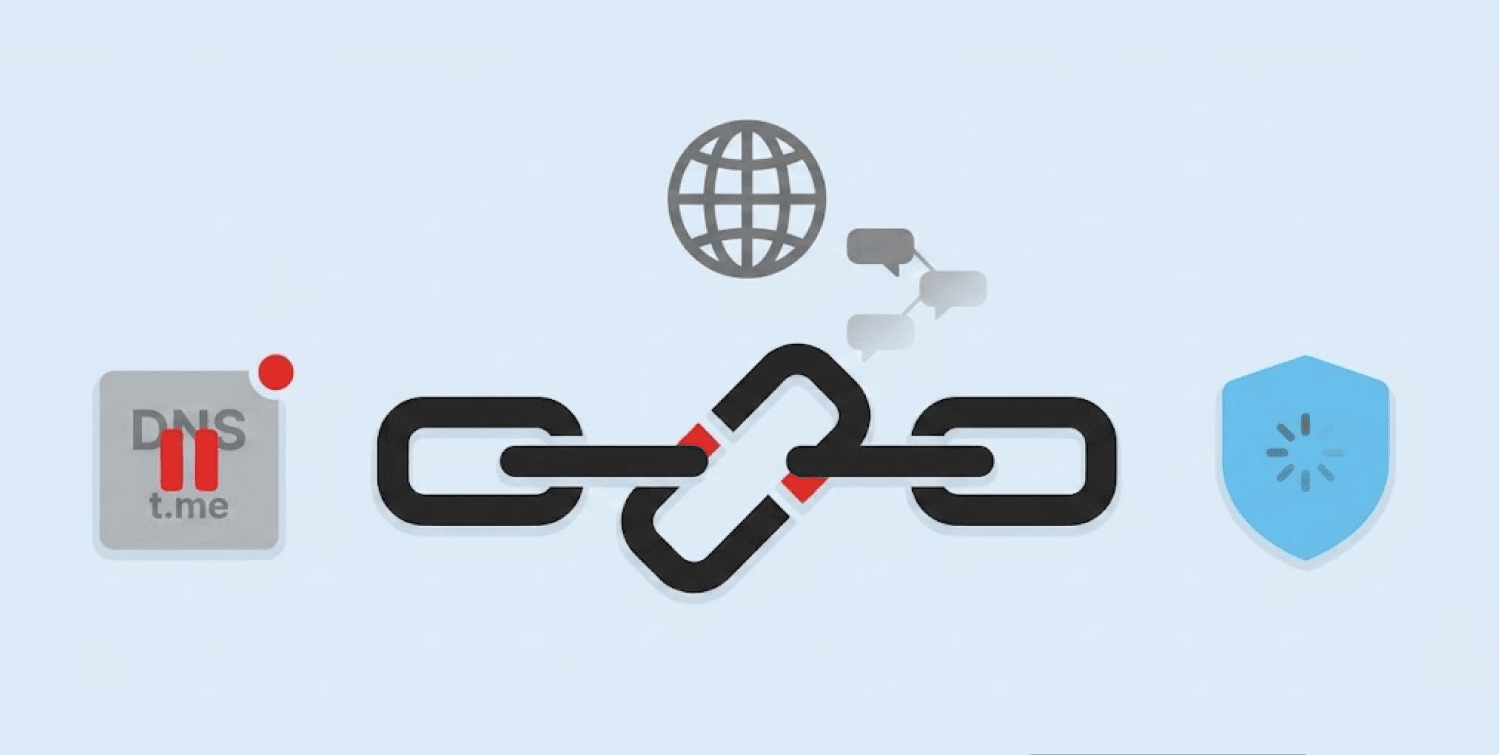
Telegram’s t.me short links stopped working around the world after the .ME registry placed the domain under serverHold.
-
The issue blocks browser access to Telegram channels, groups, bots, and user profiles, but the Telegram app continues to work.
-
Telegram and the .ME registry have not explained why the registry-level action happened.
Millions of Telegram users suddenly lost access to t.me links after the domain disappeared from the global Domain Name System (DNS). As a result, web browsers could no longer open Telegram links shared across the internet.
The problem affected links used for Telegram channels, groups, bots, and user profiles. Many websites, blogs, and social media posts that pointed to t.me also stopped working. The Telegram messaging service itself did not go offline. People could still send messages, make voice calls, share files, and use the mobile and desktop apps as usual.
Millions lose access to Telegram’s t.me links
Technical records showed that the t.me domain had received a serverHold status. This is a registry-level action that removes a domain from the DNS. When this happens, browsers cannot find the website, even if the servers behind it are still running.
Unlike a normal domain suspension handled by a registrar, a serverHold status comes directly from the domain registry. That means the domain stops resolving across the internet until the registry removes the status.
Users first noticed the problem on X. Cybersecurity-focused accounts, including International Cyber Digest and Dark Web Informer, reported that the .ME registry had placed t.me under serverHold. At the time of publication, no public reason had been given.
Since browsers could no longer translate the domain into its internet address, every t.me link failed to load. This happened even though Telegram’s messaging system remained available. The outage quickly led to complaints on social media. Many users found that Telegram links inside websites, online articles, and social media posts suddenly stopped opening.
Telegram apps continue working despite the domain issue
The domain issue did not shut down Telegram’s messaging platform. Users continued chatting through Telegram’s mobile and desktop software without problems. Existing conversations, shared media, voice calls, and other features stayed available because they do not depend on browsers resolving the t.me domain after users connect to Telegram’s network.
While the official apps remained functional, users should be cautious of where they download them; a fake Telegram app on APKPure was found stealing user data.
Some users also noticed that telegram.me, an older Telegram domain that uses the same .ME country-code extension continued working. This suggested the problem affected only time, not every domain ending in .me.
Some online observers also claimed that telegram.org had experienced domain delegation problems. However, neither Telegram nor the .ME registry confirmed those reports. Cached DNS records may explain why access varied between internet providers and different users. This could explain why some people could still reach certain Telegram websites while others could not.
Registry remains silent as Telegram seeks answers
Neither Telegram nor the .ME domain registry had released an official explanation when this article was published. Reports said Telegram founder Pavel Durov asked the .ME registry on X to investigate the problem. His public request suggested Telegram did not expect the registry-level action.
According to a cybersecurity publication, Telegram has started using telegram.me links as a temporary workaround while the issue continues. Several technology news outlets also covered the incident. These include France’s MacGeneration, Ukraine’s dev.ua, and other international publications. They all noted that the registry had not explained why the action was taken.
The incident shows how a registry-level decision can affect millions of internet users within minutes. A registry-level DNS action is different from a server outage or a cyberattack. The messaging service can keep running even when people cannot reach it through its web address.
For now, browser-based t.me links may remain unavailable until the registry removes the serverHold status or Telegram permanently switches users to another domain. There is currently no evidence that a cyberattack caused the disruption.
There is also no indication that Telegram’s messaging infrastructure has been compromised. The reason behind the registry’s decision remains unknown. Until Telegram or the .ME registry releases an official statement, the cause of the server hold action has not been confirmed.
