-
The dark web markets thrive in 2026, trading drugs, stolen data, and cybercrime tools despite takedowns like Hydra and Nemesis.
-
The new platforms and advanced security, escrow, PGP, and Monero keep operations running while threats like phishing, malware, and AI scams rise.
-
More than crime hubs, they highlight anonymity and censorship resistance, making NordVPN (currently available on a risk-free trial), Tor, and verified links essential for safety.
The dark web has long been associated with secrecy, anonymity, and hidden digital economies. Dark web marketplaces operate in encrypted spaces beyond traditional search engines, enabling users to trade goods and services with a high degree of privacy. While often linked to illicit activity, these platforms also highlight broader issues such as online anonymity, censorship resistance, and underground commerce.
Despite constant law-enforcement pressure, exit scams, and technological changes, darknet markets continue to evolve. Hidden web marketplaces continue to change as law enforcement operations, cybercrime trends, and new technologies reshape the underground economy. Some platforms disappear following investigations or suspected exit scams, while others emerge to fill the gaps they leave behind.
This article explores the leading dark web marketplaces, how they function, and their significance within the modern dark web ecosystem, strictly for educational and informational purposes.
Disclaimer: We publish this article for informational, educational, and cybersecurity awareness purposes only, just like all other content on our website. We do not promote, endorse, recommend, or facilitate access to illegal dark web marketplaces. Our coverage examines their reported activities, security risks, and impact on cybercrime. We encourage readers to avoid unlawful transactions, suspicious links, and platforms that trade stolen data or prohibited goods. Remember, privacy tools do not guarantee anonymity. Also, using them does not remove the legal consequences of illegal activity.
Top darknet marketplaces – Quick list
- Awazon Market: It operates under strict anonymity, offering a wide range of listings while emphasizing escrow services.
- Vortex Market: Reported to be user-friendly and less technical for beginners.
- Torzon Market: Cybercriminals love this place for PGP-proof feedback options, premium tiers, and over 11,000 listed products and services.
- Exodus Market: A private platform where most users are invited to join.
- Cipher Market: A privacy-focused dark web marketplace that prioritizes strong encryption and anonymous transactions.
- Mega Marketplace: A platform that provides hacking tools and counterfeit documents.
- Russian Market: A dark web space where dumps, logs, and RDPs are sold. Prices are fixed.
- Brian’s Club: A forum where criminals usually bid for credit cards and activities in line with credit fraud too.
- Tor2Door: A long-running darknet marketplace known for its stability and broad product listings.
- WeTheNorth: Another marketplace on the dark web, located only in North America or Canada.
Why darknet marketplaces still matter?
- Black market: The anonymous marketplaces are like the eBay version of the dark web. Unfortunately, you don’t get to see rare but legally collectible items or the latest game consoles. Instead, what you will most likely see are phishing tools, illegal drugs, stolen credentials, links to compromised corporate networks, and even ransomware tools.
- Endangered species: On a few occasions, you could come across a few dark web shop pets, usually animals that are uncommon. Animals listed as endangered species are occasionally sold there, as they are not available anywhere else for sale, making it a dangerous place to get into legal problems for the user.
- Revenue: On finances, the dark web economy is a hub of very lucrative activities that are usually against the law and, as a result, has generated large sums of revenue. In 2021, the marketplace raised revenue of $3.1 billion, but due to law enforcement encroaching on their activities, that figure dropped to over 2 billion dollars. Still very impressive.
- Shutdown: The dark web lost one key platform, known as the Hydra market, in 2022. To show how significant the platform was to the darknet, the market was pulling in revenue close to 1 billion dollars each year before its takedown. It didn’t end there. Some other markets have been taken down, like BidenCash in 2025 and Genesis Market in 2023. One major difference between take-downs on conventional internet and the dark web is that the latter are usually shut down forever.
- Emergence of new markets: New platforms keep coming up after some have gone down. At times, the new ones are run by the administration of some of the platforms that were taken down, under a new name, of course. The only impact felt is on trust issues, as people who traded on such markets become unsettled.
- Security information: The dark web market is a serious threat to corporate business and other institutions. In order to help in the defense of potential victims, law enforcement agencies also use reputable onion links to observe the dark web market and come up with strategies on how to combat cyber criminals. This practice of proactively scanning the dark web for stolen data has also been commercialized into a vital cybersecurity service, known as dark web monitoring, which allows individuals and companies to be alerted if their credentials or sensitive information appear for sale.
- Push back on authoritarian governments: The dark web also supports legitimate activities, including anonymous journalism, whistleblowing, and communication in countries with strict censorship. However, these uses generally involve dedicated privacy services rather than marketplaces that sell illegal goods or stolen information. It’s important to distinguish the technology from the activities people conduct through it.
Best dark net markets active today – Our Detailed list
The dark web continues to thrive because of people with sinister intentions who trade in illegal materials, drugs, or counterfeit goods. Counterfeit artworks are usually among the most lucrative on the dark web market. However, we still have cyber criminals who trade on compromised data or login malware, phishing tools. These are usually sold through auction to the highest bidder.
It’s difficult to know which Marketplaces are still active because some of them are taken down by law enforcement, and new ones come to replace the inactive ones. The following overview examines the 10 most active dark web marketplaces that have appeared in cybercrime reporting, public investigations, or underground market discussions. Their operating status varies, and some have already shut down. We include them to explain their reported activities, risks, and relevance to the wider cybercrime landscape, not to recommend their use.
Let’s look at some of the marketplaces on the dark web that are still active as of the time of this writing:
1. The Amazon Market
- URL 1: awazonevlc63543fjvtli35bk2iopdyyaaytkmmiop5avny6b24uljqd.onion/
- URL 2: awazonep3val6gxuzcl2ydllhnwb7quh5ynh76cyc3axkfoqhlbrb2id.onion/
Awazon Market is an underground marketplace that operates within an encrypted and anonymous environment, offering a wide variety of listings across multiple categories.
Reports and descriptions of Awazon Market attribute features such as cryptocurrency payments, escrow arrangements, and vendor verification to the platform. These mechanisms aim to address concerns about fraud and privacy, but their presence does not establish that transactions are secure or that the marketplace operates legitimately.
Like many modern illicit e-commerce markets, Awazon Market aims to provide a more structured and user-friendly experience while adapting to ongoing law-enforcement pressure and evolving cybersecurity threats.
2. Vortex Market
- URL: http://vortexcccpxmqfpltfelpe26tyfsxilv6zbawaokcrlijmlehnnthpyd.onion/
On the surface, this platform looks like your average legitimate commercial forum. The interface has a clean, user-friendly look.
To further make it look authentic, some of the features include functional dispute resolution, fast load times, and clean, smooth navigation. It holds great appeal to beginners who aren’t technically sound yet. What can be seen in its catalog includes tools to bypass subscriptions, stolen accounts, digital items, and illegal drugs.
Vortex Market has been described as using a conventional e-commerce-style interface that may make its illicit listings appear familiar to visitors. However, a polished design says little about a platform’s legitimacy. Such marketplaces can expose visitors to fraud, malicious content, stolen data, and serious legal risks.
For the security of users, the platform uses the Escrow fund system that is programmed for 14 days, where the buyer’s funds are protected until the vendor delivers. Cryptocurrencies are also used to hide transaction activities, which can be done with USDT, Monero (XMR), and Bitcoin.
Vendors are cross-checked with PGP encryption to stop unwanted guests from getting access to the forum. An inbuilt feature called Vortex Protocol(VP), which is linked to blockchain and a system that detects phishing, gives users much-needed peace of mind while surfing the dark web.
For those undertaking careful exploration, using a reputable dark web search engine is the foundational step to finding verified and relatively safer sites within this anonymous space.
3. Torzon Market
- URL: https://torzon4kv5swfazrziqvel2imnxcckc4otcvopiv5lnxzpqu4v4m5iyd.top/index.php
As Marketplaces keep getting shut down by law enforcement, it poses a great concern for people with criminal intentions. Torzon Market has appeared in discussions about illicit online commerce and the security measures used by underground marketplaces.
Its reported use of encryption and changing web addresses reflects broader attempts by marketplace operators to maintain their infrastructure. However, these measures do not prevent investigations, guarantee uptime, or protect users from fraud and criminal liability. The platform offers over 11,500 illegal products on its dark website.
Another tactic to keep the platform from being shut down is changing its onion links periodically. It provides physical contraband, phishing tools, malware, DDoS services, and hacking tutorials.
This dark web app uses the Tor network for its encryption. Adding to it, the forum offers the PGP encryption protocol for its chats and messages, including emails too. The use of daily URL rotation as a mirror site reduces attacks from DDoS, phishing attacks and generally avoids detection.
There are private mirrors for users who are willing to pay for a premium upgrade for better protection. As for the vendors, they need strict verification from the platform by getting information about the vendor’s reputation from other dark web online forums. Most of the time, PGP evidence is also needed.
4. Exodus Marketplace
- URL: N/A
This platform is semi-private in the sense that membership is usually granted to users with a reputation. Exodus is focused on information derived from malware.
It offers data from internal networks, corporate credentials, RDP access points, and system logs. In the field of ransomware, these tools are used as first entry points. The FBI reported about 21,000 cases of information stolen from logins in forums like Exodus. This shows how lucrative such platforms are to cyber criminals.
Contrary to the name, Exodus doesn’t offer open registration, but rather, first users can only register if they were invited by another registered member of the platform. Or deposit a certain cryptocurrency amount as an insurance measure.
Speaking of cryptocurrencies, that’s the only accepted way of making transactions to keep them hidden. The usual suspects it supports include Bitcoin, Litecoin, and the strong Monero.
Reports describe Exodus as a marketplace associated with stolen credentials, malware-derived information, and compromised accounts. Such data can fuel account takeovers, financial fraud, and unauthorized network access. Its reported privacy features do not make the underlying trade legitimate or secure.
5. Cypher Market
- URL: N/A
Its first debut was in February 2020 and is still active to date. They specialise in fraudulent documents, illegal goods, malware, counterfeit goods, and stolen credit cards.
There were reports of the platform experiencing a shutdown in 2024, but that has led to rumours of a fake exit or law enforcement shutdown. Currently, it is not listed as a defunct illegal marketplace.
One important aspect to note is that the platform uses the Tor network to ensure anonymity. The platform was usually compared to the defunct Hydra on its ability to attract law enforcement. Cypher Market reportedly relied on Tor and additional account security features to support its operations. While these technologies can provide certain privacy protections, they cannot eliminate phishing, data breaches, undercover investigations, or the risks associated with illegal transactions. Tor’s various onion routes provide superb cover from prying eyes.
Financial activities cannot take place without the use of PINS, including some account-related actions. Their best security feature is the kill switch that allows users to immediately close down their accounts whenever they feel something is wrong with them.
It can detect phishing attempts and avoid them quickly. The two-factor authentication protects the account from being compromised; even if the hacker knows the password, they still won’t be able to hijack the user’s account.
6. Mega Marketplace
- URL: http://megadmeovbj6ahqw3reuqu5gbg4meixha2js2in3ukymwkwjqqib6tqd.onion/
A popular dark web market known as Hydra was taken down by law enforcement, and was replaced by Mega Market. The platform entered the stage in 2016 and is still active as of the time of writing. That’s a very long time of existence, given the fact that darknet platforms usually come and go quickly.
It offers the usual illegal stuff like hacking tools, counterfeit documents, and illegal drugs.
Mega Marketplace has appeared in reporting about the Russian-language darknet ecosystem. Descriptions of its operations have highlighted privacy features and account protections, but publicly available security claims cannot explain on their own why a marketplace remains accessible or how authorities approach investigations.
One of its standout security features is the two-factor authentication and PGP encryption support. That’s not all. The password used by the subscriber actually produces keys that help to encrypt communication. Your password is not even known to the platform.
Let’s say you forgot your password. The only way to recover your account is by using a recovery key that you have access to. It’s very important you keep this recovery key in a safe place. Even when sharing a link, a key is sent along with the link to ensure the message won’t be compromised.
That’s making privacy a major priority. Registration is not needed for people who want to sell things on this platform. The added anonymity this offers gives the platform an added layer of privacy.
7. Russian Market
- URL: N/A
Primarily known as a platform to sell compromised accounts, login credentials, and credit card information, the platform was established in 2019 and has remained as one of the top underground digital marketplaces that’s still thriving.
Judging from the name, one would think it’s a platform mostly for Russians, but surprisingly, English is the language often used on the platform. Most computers are compromised through this platform with the use of the remote desktop protocol (RDP), their area of specialty, particularly between 2020 and 2024.
The platform eventually moved to focus on stolen credit card information and has remained in this field to date. Hackers from all over the world come to this huge platform to buy information like stolen cookies, credit card information, and client servers, and the price range is between $10 dollars(very affordable for many) to $500 or more.
The common practice on this platform is using malware to fish out account information like session cookies, usernames, and passwords. As noted earlier, it’s a place for account-based cybercrimes. The Russian market uses the Tor network, which gives an added layer of encryption for the users.
Also, to ensure the platform is not breached by spies, researchers, and law enforcement, it has become mandatory to deposit a certain amount of money once the user has registered on the platform. The use of Bitcoin, Ethereum, and Litecoin is supported on the platform for added security.
The Russian Market comes with an in-built feature known as Bank Identification Number (BIN) used not only to validate credit cards of users, but also to convert PayPal cookies. This helps users make transactions without needing to leave the website.
8. Brian’s Club
- URL: https://brians.cc/register
Brian’s Club marketplace has a long reputation, so much so that despite its security protocols, it keeps popping up on the Department of Justice list, where card fraud is frequently practiced.
To achieve this, the platform offers CCV and “dumps”. With this information, they can clone physical cards and use them for illegal transactions. The stolen data is filtered by the buyers into spending limits, BIN ranges, and the type of bank. The platform is another place that thrives on identity theft through hacked card details.
On security, Litecoin and Bitcoin are predominantly used to hide transactions from prying eyes. Logins are protected by two-factor authentication through PGP. Brian Market has remained online for more than a decade with no shutdown experience.
However, their website was breached in 2019, when more than 26 million credit and debit card records were stolen (rather, recovered, we can say) from the platform, including records they uploaded to the platform in 2019, close to 8 million in number. Until now, nobody knows who was responsible for the hack.
No law enforcement agency has made any claims on that so far. Also, none of its operators were ever arrested, possibly ruling out law enforcement involvement. The reported 2019 breach exposed vulnerabilities within the marketplace itself. Any subsequent claims about stronger security require independent verification, particularly because underground platforms operate without the transparency or accountability expected of legitimate financial services.
There are two ways a new user can be registered on the platform. The first is an invite code that is sent to the potential new user from a registered user. The second option is for the new user to deposit some Bitcoin before registration becomes successful. The operators are scared of risking possible law enforcement agencies registering as new users.
9. Tor2Door Market
- URL: N/A
A versatile platform for most illegal products or services, ranging from drugs, phishing tools, counterfeit items, and identity theft. As expected, cryptocurrencies were used so that the user’s privacy remained intact.
In September 2023, the Tor2Door went offline. Don’t be hasty. It was not because of law enforcement. Just went offline. This facilitated rumours that it was an exit scam to take away users’ funds and investments on the platform, as none of the administrators or operators could be reached.
10. WeTheNorth
- URL: N/A
If users happen to be in North America or Canada, they would very much like this marketplace. The ecosystem is regional. That is, restricted only to the regions aforementioned. The advantage of this platform to the users is cutting off law enforcement pressure from outside the region and avoiding hassles that deal with border issues.
The usual “dish” offered includes counterfeit IDs, drugs, and contraband from domestic postal services. Because of the regional restrictions, deliveries get to the recipient faster due to shorter distances. It also eliminates the chances of expected goods or items being seized.
The security protocol is commendable. The vendors must undergo two-factor authentication before entering the platform. It reduces the chances of a hacker or a law enforcement officer gaining access to the vendor’s account. The vendors must deposit a registration fee as some sort of insurance in case they misbehave.
Also, the vendors are required to show some proof of their reputation from other notable markets on the dark web. Or the vendor can be interviewed by the admins of the WeTheNorth platform. The platform reportedly used vendor screening and account verification measures. However, no such system can reliably prevent undercover investigations, compromised accounts, or deceptive participants.
When new users try to register, the site generates a phrase or code the user must save. This token is also used to recover the user’s account or during a dispute. It is one of the most secure top dark web marketplaces.
Historical or Defunct Marketplaces
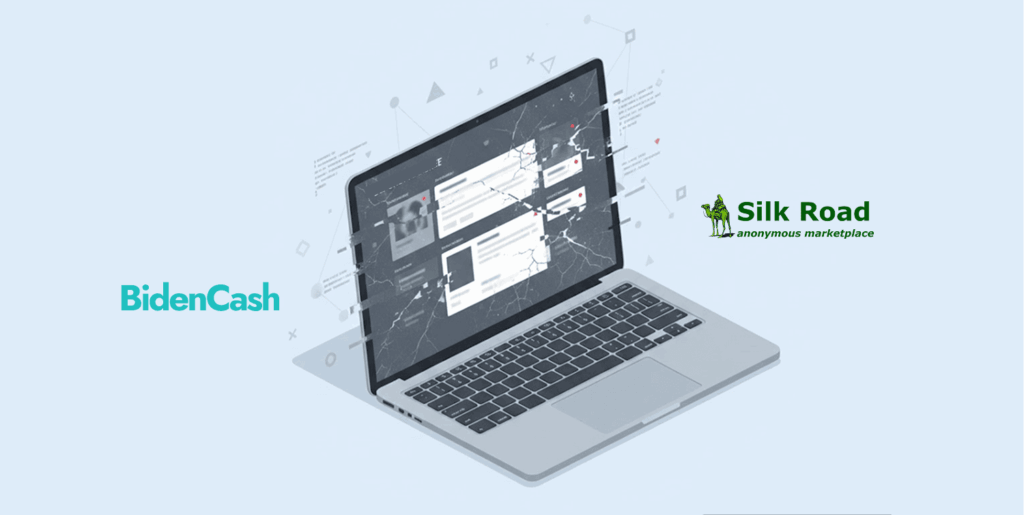
The dark web terrain is ever-changing. Marketplaces or onion links get shut down by law enforcement every now and then. As giants in the marketplace go down, new ones pop up in their place. So it’s best you know those already out of the picture to avoid entering a den of thieves unknowingly. Let’s check them out:
Hydra
Long before law enforcement shut it down in April 2022, Hydra was one of the biggest dark web marketplaces in the world. According to US authorities, the platform accounted for approximately 80% of darknet market-related cryptocurrency transactions in 2021. It facilitated the sale of illegal drugs, stolen information, and other illicit services, including money laundering.
When German authorities seized Hydra’s servers, the shutdown created an opening for other dark web marketplaces. Three platforms that gained attention during this period were Mega Marketplace, Blacksprut, and OMG!OMG!. Hydra’s closure remains a major example of how coordinated law enforcement efforts can disrupt large underground marketplaces.
STYX Market
In the large scheme of things, this platform is relatively new compared to most, but has made its mark in the dark web from 2023 to date. It’s a highly lucrative environment for cyber crimes.
People interested in money laundering find the platform very useful as they sell crypto amounts that have been verified. Other cybercrime “snacks “ offered include VDS/RDP access and bank identification numbers (BIN). Most of the users on the platform speak English, and we must add that this is not a place for wannabe cyber criminals.
It’s for experts in the field, highly sophisticated and technical cyber criminals. The platform offers very strong security to protect the platform by using a smart contract system known as Escrow. The system protects the buyer’s money by holding on to it until the seller delivers, and then the funds are released to the seller.
A study by Darkowl shows that, in most cases, the transaction limit placed on the smart system is $1,000,000. The use of cryptocurrencies helps to keep transactions hidden on the platform. STYX supports Ethereum (ETH), Bitcoin (BTC), and Monero (happens to be the least traceable).
Bohemia
Bohemia Market experienced some serious disruptions in 2023 before it eventually went offline toward the end of that year. In October 2024, Dutch authorities revealed details of an international law enforcement investigation into the platform and its operators.
The Dutch Police led the investigation, with support from agencies in the UK, US, and Ireland. Authorities arrested two suspected administrators and seized more than €8 million in cryptocurrency. Investigators also reported that the operators had carried out an exit scam following technical problems with the marketplace.
The case highlights how even large dark web marketplaces can collapse because of internal problems, financial misconduct, and pressure from law enforcement.
DarkMarket
In January 2021, German law enforcement shut down the marketplace. Not only was the platform operator arrested, but the servers used were also seized. Another classic example of international law enforcement’s battle against the dark web.
Abacus Market
The marketplace went live in 2021 with restrictions to English-speaking users only. It offers lots of illegal digital items like software keys, fake Ids and fake passports.
Other goods that can be gotten include counterfeit products and illegal drugs. Let’s not forget compromised credit card information, phishing tools, malware, and other financial crimes that exist on the platform.
Abacus Market is unlike most markets in the dark web in the sense that it focuses on verification systems for vendors and customer service. This feature helps to give a sense of security and trust among buyers and sellers on the platform. Many alternatives don’t have it. “Honour amongst thieves”.
According to a study by GitHub, the platform’s security uses PGP (Pretty Good Privacy), a protocol developed in 1991 by Phil Zimmermann. This makes sure that no one else gets access to the message except the intended recipient. That’s not all. The two-factor authentication that comes up after putting in the password adds more layers to the security.
Nemesis
Nemesis Market was another darknet marketplace that eventually went down following law enforcement action. The platform traded in all manner of illegal items, including cybercrime tools, narcotics, counterfeit goods, and stolen information.
German authorities shut it down on March 20, 2024, after seizing its server infrastructure in Germany and Lithuania. They also confiscated approximately €94,000 in cryptocurrency linked to the platform. German, US, and Lithuanian law enforcement agencies cooperated in the operation.
Before the shutdown, Nemesis Market had more than 150,000 registered accounts and over 1,100 sellers. These figures show just how active the marketplace had become before authorities dismantled its operations. Its closure also highlights the legal and cybersecurity risks surrounding illegal online marketplaces.
Genesis
This is where it gets interesting. Guess what it took to bring down this one. It took law enforcement agencies from 17 countries to shut them down. I repeat, 17 agencies, each from a different country. There was no escape for Genesis as this was a very large “man-hunt”.
The Dutch national police, in conjunction with the FBI from the US, led the raid. Other agencies that helped were the Australian federal police, the NCA in the UK, and various other law enforcement agencies across Europe.
About 200 searches were put out globally. Afterwards, 120 individuals were arrested. Users who logged in during this period saw a message with the following text: “Operation cookie monster.” This website has been seized.
Silk Road Market
It was all flashy and glossy when this platform reared its head up in the dark web sphere back in 2011. Silk Road Market operated on the Tor network. Anonymity is a given, which lured lots of people, especially the criminally minded, to the platform. You could buy almost anything on this platform, including drugs and books. Unfortunately for the platform, its operation lasted only for two years.
In 2013, the federal government shut it down, and although it popped up again in 2024 as Silk Road 2.0, the feds clamped down on it again, permanently. Other smaller sites have emerged since its shutdown, but cannot be directly linked to the original Silk Road platform. From their point of view, it is better to remain anonymous than to come up with the name “Silk Road” as the name alone attracts the feds again.
BidenCash
Not to be mistaken for Joe Biden(kidding), the platform made news flash on the dark web, and there was a rush of subscribers to the platform. Why, one might wonder. That’s because credit card information that was normally sold was being given out for free. The platform grew to 117,000 users, and cards were sold in millions.
Though card fraud was their main forte, other products were sold, like malware and other tools used for cybercrime. BidenCash gained attention for distributing stolen payment card information, including promotional data releases intended to attract attention. These activities helped spread compromised financial details and increased the risk of fraud for affected individuals.
The platform was truly buzzing on the dark web and had an easy way for users to sign up, but there was a little restriction. Deals that were allowed to pull through were ones that involved a large amount of money. But like others on the list, it was shut down by law enforcement in the US in June 2025.
On transactions, Bitcoin was used more often than Monero. Why that option puzzles us since Monero is known to be almost untraceable when compared to other cryptocurrencies. Perhaps that’s what helped to get them shut down.
The issue with the platform was that it tried to balance easy access to normal users and security. To make up for this, the operators went through different domain names to avoid being shut down. It worked for a while until the eventual clampdown by law enforcement.
Hansa Market
This cyberspace does not play with security. Privacy is a top priority here, with vendors offering all categories of goods and services, both legal and otherwise. The vendors are also verified.
Unknown to the platform, the Dutch police secretly took control of their servers and used them to gather information on the website. Once they had enough information, they shut down the platform on the 20th of July 2017. This was another joint operation by the Dutch national police, the FBI, Europol, and the Drug Enforcement Agency (DEA).
Dream Market
The platform, like most other black Marketplaces conducted trade of all sorts of items ranging from contrabands to hacking tools for cyber criminals. To ensure transactions remain encrypted, cryptocurrencies such as Bitcoin and Monero were used.
Despite the PGP encryption protocol, the platform experienced lots of attacks from DDoS. This led to the platform announcing to its users in 2019 its intention to close down the platform, which was scheduled to happen on the 30th of April.
The shutdown was not by any law enforcement, but it happened during a period when there was a joint clampdown called “Operation SaboTor,” which involved 61 arrests related to drugs sold on the dark web.
FreshTools
Another marketplace in the dark web that has been around since 2019, this platform offers stolen account information like remote desktop protocols (RDP), cPanels, and webmail. That isn’t all.
It’s a platform where cyber criminals go to get up-to-date malware like ransomware, key loggers, and Remote Access Trojan (RAT). The list goes on, including hacked accounts, digital IDs, and VPN services. Basically speaking, their forte is stolen identity in the digital “underworld”.
They really don’t play with anonymity and security, as the currencies frequently used are Monero and Bitcoin. Makes it difficult to track their cryptocurrency transactions. The platform supports USDT, USDC, XMR, Bitcoin, SOL, BCH, and LTC, giving the user many options to transact anonymously.
The website doesn’t use the Tor free dark web browser network. The advantage is in speed. FreshTools doesn’t have a deep encryption level like the ones found on the Tor dark web, and this makes pages load faster and easier for users to log in. This feature is known as Clearnet.
Archetyp Market
Users interested in the drug business found this website quite lucrative. Known as one of the biggest drug platforms in the dark web, Archetyp Market peddled some of the most sought-after narcotics like fentanyl and captagon, just to name a few.
As a huge drug trade platform, it doesn’t come as a surprise to see €250 million worth of businesses that were completed, more than 17,000 products offered, 3,200 sellers, and more than 610,000 registered user accounts. An active hub.
Vice City Market
The illegal drugs business is a highly lucrative business and it doesn’t come as a surprise to know such trades are conducted on this platform. Some of the drugs in demand by users include cannabis and benzodiazepines.
Also, one can get malware and similar tools used to get stolen credit card information. The number of active vendors on the platform was unknown because of how inconsistent the platform was.
Most were into the narcotics business. The encryption protocols were strong and consisted of PGP and two-factor authentication for the user’s privacy. The interface is user-friendly and quite similar to conventional e-commerce platforms, making it easy to navigate, especially for beginners.
Unfortunately for the users, the platform was closed down, not by any law enforcement, but simply went offline between late 2023 and early 2024. Exit scam was suspected, which is a risk users on the dark web would have to contend with. No honor amongst thieves after all.
Key features of dark web marketplace activities
Most of what has been covered by us so far are the illegal and dangerous aspects of the dark web. There are positive aspects to it.
You can use the dark web to get to legal materials that are not allowed in your location or as a way to fight a government that is authoritarian, like activists or journalists usually do. Freedom fighters. But since the dark web is a dangerous place to be, we will help you learn how to access such platforms safely (for educational and research purposes only) without putting your data in danger.
Security
Dark web marketplaces often advertise security features to attract users and create an impression of reliability. Understanding these features helps researchers identify how underground platforms operate, but their presence does not guarantee user safety, privacy, or protection from fraud.
JavaScript blocked
JavaScript is usually vulnerable to hackers, and that’s why they use it to hide malicious code used to steal information from the user. Having a dark web website that blocks JavaScript is an added security protocol.
Escrow payment system
Before funds are released for payment, many digital signatures, known as private keys, are needed. This method ensures the goods have been supplied and received before payments are made.
Two-factor authentication
It never hurts to add another layer of protection for your data. A second confirmation makes sure the person who allegedly has the account is truly the person in question. Without this feature, any hacker with phishing tools can easily compromise your account.
Anti-Phishing codes
These codes could be a word or a phrase that the user can customize so that anytime the platform sends them a message, that code will be there to show the user the message really came from the platform. With this feature, it’s very easy for the user to identify scams.
PGP encryption
Some darknet marketplaces use PGP encryption to protect sensitive messages. However, encryption alone cannot establish a site’s legitimacy. Criminal marketplaces can still expose users to phishing, malicious downloads, financial losses, and law enforcement investigations. Nevertheless, PGP encrypts your communications, including emails, to help keep your account secure.
Anonymity
Before visiting any marketplace on the dark web, ensure it has this feature that hides your activities from prying eyes. You can tell by the following.
Op-Sec guides
Some underground platforms publish operational security guides that claim to help users protect their identities. These materials reflect the importance that participants place on anonymity, but they cannot guarantee protection from investigators, malicious actors, or accidental information exposure.
Zero personal information
A platform that requests users to confirm their identity might seem like a good thing on the surface or the deep web, but it’s certainly a bad idea for markets in the dark web. When users are asked to confirm their identity, hackers and other interested entities can discover them.
Access through Tor or I2P
There are certain websites, browsers, or networks that don’t joke with anonymity and security. I2P or Tor browser is an ideal way to remain hidden and safe in the darkweb Marketplaces.
Monero XMR support
As we all know, numerous Marketplaces in the dark web make use of cryptocurrencies to aid anonymity. However, most of them can still be traced. Some dark web marketplaces favor Monero because its privacy features conceal transaction details that remain publicly visible on transparent blockchains such as Bitcoin. However, Monero does not guarantee complete anonymity, and investigators can use other evidence to examine criminal activity involving cryptocurrency.
Site reputation
It doesn’t really matter what a platform says about itself. Pay more attention to what other users say about them.
Handling of dispute
Darkweb Marketplaces usually have an effective way of resolving disputes, even better than most conventional legal platforms. So if a marketplace in the dark web doesn’t have this, avoid it.
Forum reviews
Reviews is an unbiased way of checking how other users view the platform. There are various platforms on the dark web that look like Reddit. Go through them. Reviews on underground forums can influence how users perceive a marketplace, but they are not necessarily reliable. Operators, scammers, and coordinated accounts can manipulate feedback to create false impressions of legitimacy. Readers should not treat positive reviews as proof that an illegal marketplace is trustworthy.
Length of operation
The longevity of the dark web market is a big statement on its stability and security. We advise ensuring the platform has been online for at least 6 months.
Though it’s not a guarantee in an environment as volatile as the dark web, it gives a little reassurance. Thread with care. Exit scams happen every now and then on the dark web.
Feedback on vendors
The feedback on Vendors is a sure way to verify sellers on the platform. Vendors with 4.9 ratings or above with at least 500 completed transactions are safe to engage with.
Variety of products
Goods and services are products provided. Some sites specialize in goods only, others in services. Users consider sites that offer both reliable. Let’s see how you can know this.
Variety of product
When a platform offers various products and services, it shows they are an active hub where most users’ needs are met. But a site with sellers offering just one category of goods or services shows nothing much is happening over there. It’s a red flag. Don’t transact.
Zero ethical limits
Some of these markets have no ethical codes for what they provide. You can access both good and bad content.
The dark web also hosts poisons, guns, and other life-threatening items. There are serious legal implications if one is caught visiting or buying stuff from there. Avoid at all costs.
Overly promising listing
When a marketplace catalog has listings that “wet the appetite”, that is, too good to be true, it’s likely to be a trap. For instance, a product or service that is on hot demand with the price being suspiciously low, avoid such platforms. You might pay and never receive the product or service.
As we can see, there are lots of dangers on dark websites. One needs to be extremely careful when surfing this part of the internet. Avoid platforms with legal implications, and websites with prices that are too good to be true.
Also, law enforcement can clamp down on any of the Marketplaces or worse, the site administrators deliberately shut down the website, departing with lots of users’ investments. Whenever something feels wrong on the dark web, don’t do it.
The present condition of dark web markets
The dark web market has faced a lot of challenges lately. It’s not booming like it used to. Telegram, a major alternative to the dark web, offers advantages for criminals and malicious actors communicate in private groups that require invitations.
Coupled with attacks from law enforcement, the dark web is really not in a good place right now. Will the dark web market eventually go down? There will always be people seeking illegal trades or unauthorized access to restricted information.
How to be safe on the dark web

The dark web includes legitimate privacy services alongside websites associated with fraud, malicious content, and illegal commerce. Anyone researching this environment should understand the risks before interacting with unfamiliar websites.
No browser, privacy service, or security configuration can guarantee complete protection. Nevertheless, these are the arsenals you most definitely need in that “war zone.”
VPN to TOR
Tor is perhaps the safest way to get into the dark; you can never go wrong when you combine it with a good VPN. You open the VPN first before connecting to the Tor browser or network.
This way, your internet service provider can only access your connection through a server in the VPN, but will not know you are using Tor. People in regions that ban Tor should take special care when accessing the dark web.
Using a VPN automatically hides the user’s identity and creates a fake one through the chosen server, also providing a false location.
URL verification
Clicking on URLs without checking them is like playing “Russian roulette “. Always click on links that have been verified to avoid “stories that touch the heart”. To verify links, we recommend using search engines meant for the dark web to verify these URLs before clicking.
A good instance is onionwiki. Another option includes Dread, Dark.site, or Tenebris to check other users. Once you have started using the confirmed links, save them as bookmarks so you can always go back to them in the future.
Sandboxes
Given that the dark web is a stage where people with little or no ethical codes trade with information or products stolen from seemingly decent folks who didn’t guard their information well. So venturing into these “shark-infested waters” has the potential to add you to the list of victims.
Links need to be verified, no matter what. Avoid clicking or downloading from random links, as malware could overrun your device and compromise your information.
Experts recommend using sandboxes to thoroughly scrutinize every link.
Other notable alternatives include the following:
- Qubes operating system: Organises your to-do list in isolated Virtual Machines.
- VirtualBox: Has full disc encryption and a Linux VM.
- Tails operating System: Exists on a USB, providing the needed privacy.
Verifying Authenticity
One thing you need to bear in mind while on any dark web app is that the whole system is out to get you. It’s a dog-eat-dog world out there. Just like a hunter in a forest, you need to ascertain the safety of where you want to “camp” for the night. In the dark web, always check the following:
- Sign-in history: Multiple sign-ins from different countries show that hackers have hijacked your account.
- PGP signature: A secure platform that prioritizes your safety will use PGP signatures, which users can verify with their own private keys against the public keys. PGP encrypts your chats and emails.
- A responsive support is not always good: On average, it pays to have a good support system in a platform that responds quickly to your needs, but when they are too fast, it’s suspicious.
- Favicons: A reputable and safe dark web website should provide users with the option of selecting an onion link or icon of their choice. If that option isn’t available, the site has likely closed.
How to stay safe on the dark web
There are specific strategies one must employ to remain safe on the dark web. The survival of your data and identity depends on them:
- Disable JavaScript: Hackers and phishing tools commonly exploit JavaScript. Deactivating it makes your account more secure.
- Different Wallets: To keep hackers away from tracking your account, it is wise to use different wallets when visiting different websites on the dark web. This will throw them off your track.
- Trust no one: Due to the nature of the darkweb, everyone should be a suspect to you. Don’t count any fellow user as a friend until they have been verified.
- Confirm all PGP keys: If you want to buy something from a vendor, make sure their PGP keys are signed. If they aren’t, don’t engage in trade with them.
- Change passwords: We advise you to change passwords when visiting different websites on the dark web. There are tools to help you manage your passwords, like Bitwarden or KeePassXC. Do not reuse passwords.
- Confirm every onion link: To verify onion links, use Torch, DuckDuckGo, Ahmia, or GitHub. These are reliable sources to verify onion links. The moment you verify one, always bookmark it for future use and ease.
- Activate your account security features: It’s important to turn on the security features in your account, like two-factor authentication or Anti-Phishing codes, to keep people with bad intentions away from your account.
- Privacy-oriented operating systems: It won’t hurt to always use either Tails or a sandbox virtual machine while surfing the dark web. This protects your information from being compromised.
- Using a reliable VPN: It’s always preferable to connect to a VPN before linking to the Tor browser. Anyone tracking your data will only see the VPN server and won’t know you’re using the Tor browser. When we say a reliable VPN, we mean some of the good paid ones. The free ones don’t cut it.
Real-world dangers are lurking in the dark web. Knowing these threats is equally important.
- Exit scams: This happens when the admins of a dark web platform shut down the website under the pretense of doing maintenance, but never come back online again. The users lose any deposits they made on the platform. This happens every time on the dark web, as we noticed with some of the defunct darkweb marketplaces.
- Phishing mirrors: Cyber criminals create websites that mimic original sites. If you mistakenly log in and make a deposit, scammers redirect the funds to their own accounts. You not only lose your money but also risk having your account information stolen and sold on the dark web.
- Keyloggers: They use JavaScript to capture your PGP passphrase, crypto wallet keys, usernames, and passwords. As earlier pointed out, deactivate JavaScript.
- Wallet-draining: Your wallet will be drained by scripts buried deep in the wallet that are malicious in nature. These are achieved through product images.
The future of the dark web market
As days go by, hackers, cyber criminals, and drug dealers on the dark web get smarter by the use of recent technology to beat the odds. It’s important to know some of these trends to stop you from being a victim. Shall we begin?
Law enforcement clampdown will continue
So long as there are criminal activities going on on the dark web, law enforcement will continue to mount pressure on these websites. As long as accounts continue to be compromised, authorities will continue to take action. As cybercriminals get smarter with tech tools, so does law enforcement, which also stays updated on the latest dark web tools.
Law agencies, at times, create fake marketplaces to arrest people who engage in illegal activities. Law enforcement can track even privacy-focused cryptocurrencies like Monero using tools such as CipherTrace.
Decentralized model
Instead of having a central server or system that makes it easy for law enforcement to shut down websites on the dark web are opting for a peer-to-peer network, meaning each user becomes a network link in the system. Law enforcement can shut down a link but not the entire network or platform.
The use of AI
In today’s modern world, AI has come to stay, irrespective of how people feel about it. Both legitimate and malicious actors use AI tools on the dark web, and the ways they can apply AI are virtually limitless. For instance, AI can clone VIPs or popular vendors’ voices, prompting people on a fake platform to transfer funds.
There is also the danger of fake reviews generated by AI to give a false impression about a fake site, making it look authentic. It has become more dangerous to navigate through the dark web.
The use of more privacy features
Speaking of the dark web, it’s advisable to activate as many security(aforementioned) and encryption features as possible, especially when they are available. Privacy-focused cryptocurrencies continue to feature in discussions about underground digital commerce.
Their ability to obscure some transaction details creates challenges for investigators, although these technologies also support legitimate financial privacy. The distinction matters because privacy protections do not make unlawful transactions acceptable or immune from investigation.
While Monero is strong, people also know that alternatives like Zcash provide anonymity. People can easily trace Bitcoin these days, and it is no longer considered a strong option for encryption.
Escrow system
Escrow is a system that acts like the admin. It ensures all parties complete the deal satisfactorily. Instead of sending funds to an admin, the buyer transfers the payment directly into the smart contract.
The system holds funds until the vendor delivers the goods or services and then releases the payment. If a dispute arises, the system locks the funds and releases them only after both parties resolve the issue.
Who will win in the future?
As cyber criminals continue to find new ways to improve their trade, law enforcement agencies have upgraded. There will continue to be a shutdown of illegal websites on the dark web, and the bad guys will continue to find innovative ways to evade the police.
The battle between “good” and “evil” will never stop. Hunters will keep hunting, and prey will continue to adapt to avoid capture.
Conclusion
Dark web marketplaces continue to present challenges for cybersecurity professionals, financial institutions, and law enforcement agencies. Their use of encryption, cryptocurrencies, and anonymous networks can complicate investigations, but these technologies do not eliminate fraud, security vulnerabilities, or legal accountability. Understanding how these marketplaces operate helps readers recognize cybercrime trends without participating in the activities that sustain them.
The dark web is not for the faint-hearted, as attackers constantly claim victims. However, you can navigate it with far less risk by carefully following proper security and safety protocols.
Tor is the leading legal gateway to the dark web, with platforms like Facebook, BBC News, and academic institutions using its onion services. Combining Tor with a premium VPN is perhaps the best security you can give yourself on the dark web.
Don’t forget to use cryptocurrencies for transactions and ensure that what you are buying is not against the law. Do your best to desist from illegal activities while surfing the dark web. For those interested in a broader view of the dark web beyond marketplaces, including forums, leak sites, and privacy services, our guide to the best dark web sites provides a wider look at this hidden ecosystem.
FAQs
Browsing through the dark web market isn’t illegal outright. Depends on what you do on the platform. If you engage in illegal activities, then you are inviting legal problems.
Despite having a bad image, it is not against the law to visit it. There are good ways of using the dark web without breaking the law, especially with the Tor browser.
People widely regard Tor as the best browser due to its strong encryption and onion-routing system.
Although Tor provides strong encryption, investigators can still trace users who reuse passwords or log in with real credentials.
Avoid illegal activities at all costs. Law enforcement shuts down most websites, and if authorities flag your activities, they can arrest you and potentially send you to prison.